Credo Mobile Support

  • Subscribe to our RSS feed.
  • Twitter
  • StumbleUpon
  • Reddit
  • Facebook
  • Digg
Showing posts with label Supreme Court. Show all posts

Tuesday, 19 November 2013

House To Vote On Bill That Would Impose $5,000 Fee For Protesting Drilling Projects

Posted on 10:38 by Unknown

House To Vote On Bill That Would Impose $5,000 Fee For Protesting Drilling Projects

By Emily Atkin on November 18, 2013 at 3:05 pm

"House To Vote On Bill That Would Impose $5,000 Fee For Protesting Drilling Projects"

John Boehner
CREDIT: AP Photo/J. Scott Applewhite
The House is likely to vote on a number of GOP bills this week related to the oil and gas industry, arguably the most sweeping of which is the Federal Lands Jobs and Energy Security Act.
The bill, introduced by Rep. Doug Lamborn (R-CO), is broad legislation designed to make it much easier for oil and gas companies to obtain permission to drill on public lands. If signed into law, the legislation would automatically approve onshore drilling permits if the U.S. Department of Interior (DOI) failed to act on them in 60 days.
If an individual does not like a proposed drilling project and wanted to oppose it, he or she would have to pay a $5,000 fee to file an official protest.
In addition, Lamborn’s proposed bill would direct the DOI to begin commercial leasing for the development of oil shale, a controversial type of production that has been largely banned by the United States since President Herbert Hoover prohibited the leasing of federal lands for oil shale. Oil shale — which should not be confused with the more common “shale oil” — is a type of rock that needs to be heated to nearly 1,000 degrees Fahrenheit to produce crude oil, which then has to be refined.
Jessica Goad, research manager of the Center for American Progress’ Public Lands Project has said the process of producing oil shale “takes a large amount of energy and money, as well as 3-5 barrels of water per barrel of oil produced, a dangerous issue in the parched West.” The Natural Resources Defense Council calls it “the dirtiest fuel on the planet.”
Nonetheless, the largest deposits of oil shale in the world are in the United States in Colorado, Utah, and Wyoming — 70 percent of which is on land owned by the federal government. Under Lamborn’s bill, the government would be required to offer 10 leases on federal lands in 2014 for oil shale research and demonstration projects. And before 2016, the government must hold at least 5 commercial lease sales of federal lands for oil shale development, each no less than 25,000 acres.
The oil produced from the oil shale could provide the United States with energy for the next 200 years, the bill says, and create an estimated 350,000 jobs. But according to the NRDC, oil shale production would emit four times more carbon pollution than producing conventional gasoline, credited to the amount of energy it takes to get hydrocarbons out of the rock.
“This bill is not simply anachronistic; it is dangerous,” a group of Democratic Representatives said in their dissent of the bill. “It would harm the environment, short-circuit critical reviews, and establish barriers to people wishing to challenge decisions on oil and gas development in their backyards.”
The entire bill, along with amendment votes and dissents, can be read here.
Update
On Tuesday, the Obama administration announced in a statement that it would likely veto the bill if passed by both the House and Senate.

 House of Representatives Phone Numbers
Read More
Posted in Free Speech, Lemmingtarian, Libertarian, No H8, sanity, Stupid, Supreme Court, Tea Party, Voter Suppression | No comments

Monday, 18 November 2013

Bill Maher Sums Up The ‘Problem With Today’s Conservatives’ In 5 Minutes

Posted on 07:14 by Unknown

Bill Maher Sums Up The ‘Problem With Today’s Conservatives’ In 5 Minutes

posted by Omar Rivero November 16, 2013
When it comes to pointing out just how conservatives and the Republican Party are, and have been, wrong on just about every major issue of contention in recent history, nobody does it quite like Bill Maher.
On this week’s edition of HBO’s Real Time, Maher presented a powerful segment join the connection between conservative Supreme Court justices and the influx of corruption in our political system.
While describing this connection, he beautifully summarized the “problem with today’s conservatives”. I would say more, but I probably shouldn’t spoil it for you. Let’s just say that it is a very important message that every American needs to understand.
Please watch the video below and share this and other related articles on social media forums so that everyone will draw the connection between voting Republican and our corrupted political system.

Read More
Posted in Bill Maher, civil rights, Conservative, GOP hypocrisy, Judges, Judiciary, Republican, Scalia, Supreme Court, Tea Party, Tin Foil Hat | No comments

Friday, 15 November 2013

AlterNet Comics: Jen Sorensen on Passing Discriminatory Laws

Posted on 07:02 by Unknown

AlterNet Comics: Jen Sorensen on Passing Discriminatory Laws

There's never been a better time!
November 14, 2013  |   
Read More
Posted in ALEC, Family Research Council, FreedomWorks, GOP hypocrisy, Heritage Foundation, KOCH BROS, Religion, Supreme Court, Tea Party, Tin Foil Hat, Tony Perkins | No comments

Thursday, 14 November 2013

Warrantless search: Supreme Court considers a puzzling case

Posted on 10:34 by Unknown

Warrantless search: Supreme Court considers a puzzling case

The Supreme Court decided years ago that when a home's co-occupants disagree over a request for warrantless search, the objector holds sway. But if that person is arrested and led away, then what?

Christian Science Monitor
By Warren Richey 18 hours ago
 
 If police show up at the front door of a house occupied by two people and request permission to search the house, what happens if one occupant says no and the other says yes?
Seven years ago, the US Supreme Court answered that question, ruling that in the event of a tie between disagreeing occupants the objecting occupant wins. There would be no consent for a police search.
On Wednesday, the high court took up a similar case, but with an important twist. What happens if one occupant objects to a search, the police then arrest the objecting occupant, and subsequently obtain consent to search from the other occupant?
That’s the question in Fernandez v. California (12-7822), a case involving a police search of an apartment in Los Angeles shared by a suspected street gang member and his girlfriend.
The case is important because it will help define the contours of the Fourth Amendment protection against unreasonable searches and seizures by the police.
More specifically, it will help give clear notice to the police and to judges what the rules are when police seek permission to conduct a warrantless search of a residence.
Under the Fourth Amendment, law enforcement officials are required to obtain a judicially-authorized warrant before conducting a search of a home. But there is nothing stopping police from simply asking an occupant for permission to search.
If permission is given, no warrant is necessary and any evidence or illegal contraband discovered can be seized and used in a trial.
The high court case stems from a series of events in October 2009 involving Walter Fernandez, a suspected member of the Drifters, a criminal street gang.
The events began with an armed robbery by someone with a gang-related tattoo on his head who matched Mr. Fernandez’s description. Shortly after the robbery, two police officers were positioned near Fernandez’s apartment building, a known hangout of the Drifters.
The officers saw a man run into an apartment. Moments later they heard yelling and the sounds of a fight. After calling for backup, five police officers approached the apartment.
A woman, Roxanne Rojas, answered the door, holding a two-month-old baby. Ms. Rojas’s face was freshly bruised and it appeared she’d been bleeding.
As the police asked Rojas to step outside, Mr. Fernandez appeared in the kitchen wearing only boxer shorts. He was sweating. “You don’t have any right to come in here,” he told the police. “I know my rights.”
The officers entered the home, placed Fernandez under arrest for suspected domestic violence against Rojas, and took him downstairs and away from his girlfriend.
As they were leading Fernandez downstairs, one of the officers noticed the tattoo on the suspect’s head and that it matched the description from the recent robbery. The robbery victim was brought to the apartment building where he identified Fernandez as the person who robbed him.
Roughly an hour after Fernandez was led downstairs, the lead police officer returned to the apartment. He asked Rojas for her consent to search the apartment. According to briefs in the case, Rojas did not want to consent to the search, but she did so anyway.
Police found a sawed-off shotgun, ammunition, and a knife. They also found clothing matching the description given from the robbery scene.
Fernandez was charged with three different crimes, unlawful possession of firearms, domestic violence, and robbery.
Before the trial, his lawyer sought to suppress the evidence seized during the search of the apartment. He argued that the police did not obtain valid consent to conduct the search. They either needed consent from both Rojas and Fernandez or they needed a warrant, he said.
The trial court rejected the argument. Fernandez then pleaded no contest to the gun charges, pending the outcome of his appeal.
In the meantime, he was convicted of the two other charges and sentenced to 14 years in prison.
At issue before the high court is whether Rojas’s consent was enough to justify the police search, or whether the search was improper because Fernandez had clearly stated his objection to a search when police first arrived.
The justices appear to be sharply split on the issue. Several expressed concern Wednesday that if they established a hard and fast rule that the objection of a co-tenant could not be overturned by the other, it might leave women who are domestic violence victims in a precarious position.
“It’s her house, too,” Justice Stephen Breyer said. “Can’t she invite people into her house, too, whom she wants, including the policeman?”
Jeffrey Fisher, a Stanford Law School professor representing Fernandez, said a domestic violence victim could retrieve a dangerous or illegal item from the house and give it to police at the front door. He added that if there was probable cause to suspect a crime, police could secure the house long enough to obtain a search warrant.
Justice Anthony Kennedy expressed skepticism about Professor Fisher’s position. He said if the court endorsed a rule that would allow a co-tenant’s objection to stand long after the co-tenant had been charged and removed from the scene it would mark a “vast expansion” of the court’s prior legal precedent.
Fisher said the Fernandez case was a rare instance, and that in most cases police would obtain valid consent. He said if the high court upholds the search of Fernandez’s apartment it would give police complete control to conduct warrantless searches by simply removing an objecting occupant whenever the other occupant would allow a search.
Justice Ruth Bader Ginsburg asked why police did not obtain a warrant.
Chief Justice John Roberts suggested that police might have been concerned that other gang members would show up and attempt to retrieve any known contraband in the apartment.
Assistant US Solicitor General Joseph Palmore urged the justices to uphold the warrantless search based on the girlfriend’s consent.
In the high court’s 2006 case, he said, the justices ruled that if one of two co-occupants refuses to consent to a police search – when both co-occupants are present at the house – the police must abide by the wishes of the objector.
In contrast, he said, both co-occupants were not present at the time police obtained the agreement of Rojas to allow the search.
“When the objector is absent, there is no tie, and the normal rule applies,” Mr. Palmore said. “The normal rule is that each occupant has the authority in her own right to admit visitors to her own home.”
Justice Sonia Sotomayor asked why police felt a need to search the apartment. Rojas’s statement to police did not include any detail that would suggest there might be illegal items or contraband in the house, she said.
“I think this was just a pure – ‘We want to find something else,’ ” she said.
Palmore said the police officers were in the gang unit and were aware of a possible connection between Fernandez and the earlier robbery.
“They at that point had probable cause to get a warrant,” he said. But he added that they were justified in seeking Rojas’s consent to speed the investigative process.
A decision in the case is expected by next June.
Read More
Posted in civil rights, Judges, Judiciary, Supreme Court | No comments

Suppress the Vote With Lies? Sure, Go Ahead. WTF?

Posted on 08:21 by Unknown

Suppress the Vote With Lies? Sure, Go Ahead

image: should false speech be free speech By: Katie Fleming

March 23, 2012 
The Denver Post is out with an editorial that proudly supports the defeat of Senate Bill 147, which would have made it a felony to spread falsehoods about election procedures or voter eligibility. Their reasoning? Outlawing false speech has a chilling effect on non-false speech. What?
Let’s be clear: In no way do we condone robocalls that attempt to scare voters from the polls, or efforts to undermine voters’ belief in their eligibility to cast a ballot.
Our concerns center on the chilling effect of criminalizing speech. It is easy to envision how such a law, if it had passed, could have been used to threaten not only the dishonorable, but even well-intentioned voter participation advocates who maybe weren’t exactly right in summarizing complex election law.
Why does it matter? Free speech is a precious constitutional right, and any law that attempts to curb that right — particularly one that makes speech a felony — must be considered very carefully. …
The best defense against such deception is an informed electorate. Voters must take steps to root out the truth, and the media can help them.
(Denver Post Editorial Board. March 22, 2012. Punish lies at the ballot box. Denver Post.)
Instead of outlawing the deception and trickery involved in voter suppression, the Denver Post Editorial Board thinks the speech of voter supressionists is so important that they’re willing to sacrifice the right to vote for people who don’t happen to be informed enough not to believe liars.
Instead of saying “You’re going to jail for telling students they can’t vote until Wednesday,” they’re saying “Sure, suppress the vote by bowing to false claims by unknown special interests, we think struggling media outlets with shrinking newsroom budgets and owned by just a handful of companies with their own interests at heart can make sure voters are informed.”
Not very compelling.
Read More
Posted in Free Speech, Sedition, Supreme Court, Tin Foil Hat, VOTE, Voter ID, Voter Suppression, Voting Rights Act, VRA | No comments

Supreme Conflict

Posted on 08:15 by Unknown

Supreme Conflict

By: Stephen Spaulding

November 13, 2013

Justice Clarence Thomas will headline a black tie fundraising dinner tomorrow evening for The Federalist Society, which describes itself as “a conservative and libertarian intellectual network that extends to all levels of the legal community.” Its purpose includes “reordering priorities within the legal system to place a premium on individual liberty, traditional values, and the rule of law.” Joining Justice Thomas onstage and as a speaker will be Judge Diane Sykes of the U.S. Court of Appeals for the 7th Circuit.
By appearing, Justice Thomas and Judge Sykes will violate the Code of Conduct for United States Judges – although the Code of Conduct does not bind the Supreme Court. More on that point later.
Today, Congresswoman Louise Slaughter of New York, Common Cause and the Alliance for Justice filed a formal complaint with the Seventh Circuit Court of Appeals against Judge Sykes and sent a letter to Chief Justice Roberts requesting that the Supreme Court adopt a formal Code of Conduct.
At the outset, I should make it clear that there is no ethical lapse when Justices of the Supreme Court appear before legal organizations like the Federalist Society, irrespective of the organization’s ideological bent. If anything, members of the Court should be encouraged to engage with the public and legal organizations of all stripes, rather than remain cloistered and isolated from civil society.
The problem occurs when members of the judiciary – sworn arbiters of impartial justice – are featured as speakers at fundraisers that advance the private interests of their sponsors.
The Code of Conduct covers this concept. Specifically, Commentary to Canon 4(C) states that “[a] judge may attend fund-raising events of law-related and other organizations although the judge may not be a speaker, a guest of honor, or featured on the program of such an event.”
The Federalist Society’s annual dinner coincides with its annual convention and is clearly a fundraiser. For at least the past two years, the dinner program booklet included a long listing of corporations and law firms that the Federalist Society “gratefully acknowledge[d]” for “their generous support of the annual dinner.” “Gold sponsors” in 2012 and 2011 included Chevron Corporation, Pfizer, and Verizon, while “silver sponsors” included Time Warner, Inc., Facebook and PepsiCo, Inc. While most of the convention takes place at the Mayflower Hotel, the separately ticketed annual dinner occurs at a much larger venue a couple of miles away.  It has been sold out for days. Attendees for the past few years have included more than 1,200 lawyers, lobbyists, Members of Congress and other guests. This year, the price of admission is $200.  Justice Thomas’ and Judge Sykes’ photographs appear on the website selling the tickets.
Justice Thomas has a long history of flouting the Code of Conduct. In 2011, on the very day that the Supreme Court met in conference to decide whether to hear the Affordable Care Act cases, he joined Justice Antonin Scalia in headlining the Federalist Society’s 2011 annual dinner. The event was billed as a “celebration of service” for their time on the bench.
Other justices have been featured guests and speakers at previous annual dinners. The 2012 fundraiser featured Justice Samuel Alito, 2011 featured Justice Thomas and Scalia, 2010 again featured Justice Scalia, and 2009 featured Justice Alito.
Justice Thomas has traveled on the Federalist Society’s dime, too. Four years ago, Justice Thomas disclosed that the Federalist Society reimbursed him for an all-expenses paid trip to Palm Springs, California for a “speech.” As the New York Times reported, Justice Thomas’s visit coincided with “a political retreat for wealthy conservatives” that was “organized by Charles and David Koch,” the billionaire industrialists and benefactors of libertarian causes, and took place over the same span of days. A spokeswoman for the Supreme Court confirmed that Justice Thomas made a “brief drop-by” at the Koch retreat “and had given a talk.” Meanwhile, the Washington Post reported that the Federalist Society had “no meetings of its own at the venue,” and quoted the Society’s President Eugene Meyer as saying that they “‘knew the justices were going to be out there [in Palm Springs],’ and would be interested in hearing what they had to say.”
Common Cause asked the Federalist Society to disclose whether any separate Federalist Society events took place over those four days in 2008 in Palm Springs, but never received a response. (Justice Scalia also disclosed that the Federalist Society paid for his trip to the vicinity in California one year earlier. Think Progress released documents from Koch Industries about previous meetings, which advertised that they had “featured such notable leaders as Justices Antonin Scalia and Clarence Thomas”).
Justice Thomas also failed to disclose more than $680,000 that his wife, conservative activist Ginni Thomas, received in compensation from the Heritage Foundation.  After Common Cause drew attention to this matter, he quickly amended several back-years of disclosure forms, blaming his mistake on a “misunderstanding of the filing instructions.” Congresswoman Louise Slaughter, joined by 52 fellow Members of Congress, sent a letter to the Judicial Conference of the United States, requesting a referral to the Attorney General for an investigation after it was learned that Ms. Thomas was paid $1.6 million during the years Justice Thomas checked the “none” box for spousal income on his annual forms.
Our highest court should meet the highest ethical standards.  Although the justices are the only judges not bound by a formal, transparent code of ethics, the Supreme Court has publicly agreed to abide by its principles and could formally adopt a transparent code at any time. Chief Justice John Roberts dedicated his 2011 Year-End Report to the topic, stating that the Code of Conduct for U.S. Judges “plays the same role” for the Supreme Court as it does for the rest of the federal judiciary. He wrote that “Members of the Court do in fact consult the Code of Conduct in assessing their ethical obligations” and “are all deeply committed to the common interest in preserving the Court’s vital role as an impartial tribunal governed by the rule of law.” Justices Anthony Kennedy and Stephen Breyer have said this, too.
Clearly, however, nothing has not stopped some members of the Court from repeatedly offending Canon 4(C)’s prohibition on headlining fundraisers for private organizations. And there’s nothing binding. That’s why we filed a formal complaint against Judge Sykes – who is bound by the Code – and a letter to Chief Justice Roberts, urging adoption of the Code.
Common Cause commends Congresswoman Louise Slaughter and Senators Murphy, Blumenthal and Whitehouse for their leadership on this issue. They have introduced the Supreme Court Ethics Act of 2013 – bicameral legislation that would require the Court to promulgate a code of ethics that includes the 5 canons of the Code of Conduct, with any amendments the Court determines to be appropriate. This is an important action showing that transparent ethics and accountability matter, and that the Supreme Court should be held to the same ethical standards as everyone else.
Our democracy will be stronger for it.
For more on Common Cause’s work on Supreme Court ethics, you will find more resources here and from the Alliance for Justice here
Read More
Posted in Clarence Thomas, Criminal, Judges, Judiciary, Scalia, Supreme Court | No comments

GOP’s unparalleled radicalism: Time for Democrats to go nuclear on judges!

Posted on 07:07 by Unknown

GOP’s unparalleled radicalism: Time for Democrats to go nuclear on judges!

Republicans are nullifying vacancies on a key law-making court so they can subvert the law. They must be stopped

Brian Beutler


GOP's unparalleled radicalism: Time for Democrats to go nuclear on judges!
Sen. Patrick Leahy, D-Vt., Sen. Chuck Grassley, R-Iowa,
on Capitol Hill in Washington,
Monday, May 20, 2013. (Credit: AP/J. Scott Applewhite)
When last we checked in, Senate Republicans were vowing to effectively nullify three vacant seats on the ultra-powerful D.C. Circuit Court of Appeals by denying confirmation to all of President Obama’s nominees — to prevent Obama from giving the court a more liberal balance.
These filibuster threats were disconnected from all juridical merits. They were instead the tactical core of a subversive plan to preserve the conservative status quo on a court that will settle a tremendous amount of administrative law between now and the end of Obama’s presidency. Put another way, Republicans were threatening to use the Senate’s filibuster rules to improve the statistical odds that the court will upend Obama administration regulations — to unilaterally change law from their minority position in the Senate.
Democrats were obviously unhappy about this, and began threatening — once again — to nuke the supermajority cloture rule, this time as it pertains to judicial nominees.
A week and a half later, Republicans have successfully filibustered two D.C. Circuit Court nominees, and are promising a hat trick. They seem inclined to call the Democrats’ bluff, and are using political psy-ops as a kind of deterrent against the threat that Dems will go nuclear.
But the nullification strategy is radical, and entirely new. It transgresses the semi-stable norms — regarding professional qualification and ideological temperament — that had previously governed which nominees were subject to rejection by the minority. And so the persuasive power of GOP threats are self-limiting.
“Be careful what you wish for,” Sen. Chuck Grassley, R-Iowa, the senior Republican on the Senate Judiciary Committee, said on the Senate floor Tuesday. “[I]f the Democrats are bent on changing the rules, then I say go ahead. There are a lot more Scalias and Thomases out there that we’d love to put on the bench. The nominees we would nominate and confirm with 51 votes will interpret the Constitution as it was written. They are not the type who would invent constitutional law right out of thin air.”
This is a bizarre warning. If Democrats change the rules, then future Republican presidents will flood the judiciary with … precisely the kind of conservative jurists they’ve been nominating and getting confirmed for years and years.

When Clarence Thomas was confirmed, Democrats held the majority in the Senate. It’s not just that there was no filibuster. Democrats controlled the chamber and allowed the minority to confirm him with an up or down vote. Most Dems voted no, but he was confirmed 52-48. On Tuesday, Cornelia Pillard got 56 votes in the Senate, more than Thomas but four short of the 60 required to overcome a filibuster.
Republicans controlled the Senate when Ronald Reagan nominated Antonin Scalia, but not only did Democrats decline to filibuster him, he was confirmed unanimously.
Things had become significantly more polarized and contentious by the time George W. Bush became president, but his two Supreme Court nominees (not counting Harriet Miers, an outlier whom Republicans sank on their own) were both confirmed pretty easily. John Roberts on a 78-22 vote, facing no filibuster; Sam Alito by a vote of 58-42 after a bunch of Democrats helped the GOP break a symbolic filibuster. At no point in George W. Bush’s presidency did Democrats try to moot court vacancies by refusing to confirm a category of nominees, or accuse Bush of court packing simply by trying to fill those vacancies.
But that’s where we are today.
It’s true that the elimination of the judicial filibuster would allow a future Republican president to fill vacancies more expeditiously. But it would give Obama the same power.
For Grassley’s threat to have any teeth, he’d need to warn Democrats that Republicans will confirm hyper-radicals whom they’ve been too timid to nominate in the past, or would unilaterally add seats to appellate courts and pack them with right-wing judges. But that would be crazy.
Alternatively, Republicans could just agree to confirm some of Obama’s judges. I think Democrats would probably drop the nuclear threat if Republicans cleared two of Obama’s three D.C. circuit nominees. Maybe Republicans could secure the confirmation of a third, more conservative judge, or get the remaining seat on the court eliminated legislatively.
But their current position — daring Dems to go all the way nuclear or cave completely — gives Dems almost no choice but to pull the trigger. If Republicans had meritorious objections to any of these nominees, the nuclear threat would be a disproportional escalation. Obama could find other judges. What they’re doing instead is a judicial replay of their unacceptable bid to unilaterally gut Wall Street’s consumer watchdog office and void the National Labor Relations Board. Democrats didn’t stand for that, and won. Republicans caved and confirmed several waylaid executive branch nominees over the course of just a few days. They should run the same play again. And if Republicans don’t fold, they should go nuclear.
Sen. Pat Leahy, D-Vt., chairman of the Judiciary Committee, is on the same page.
“I think we’re at the point where there will have to be a rules change.”
Brian Beutler Brian Beutler is Salon's political writer. Email him at bbeutler@salon.com and follow him on Twitter at @brianbeutler.
Read More
Posted in ACA, Judges, Judiciary, Obstruction, Supreme Court | No comments

Wednesday, 13 November 2013

Supreme Court to weigh employer-union organizing deals

Posted on 08:57 by Unknown

Supreme Court to weigh employer-union organizing deals

Reuters
By Amanda Becker 8 hours ago
 
 
WASHINGTON (Reuters) - The Supreme Court will hear a case on Wednesday that could have a major impact on the U.S. labor movement as it questions whether agreements often made between unions and private-sector employers over unionization campaigns violate an anti-corruption law.
The court is examining deals known as "neutrality agreements" in which employers agree not to campaign against unionization. The agreements have been in use for decades and the case could change how unions go about organizing.
If the justices find the pacts are a "thing of value," prohibiting employers and unions from entering into them, it would be a major blow to organized labor as it struggles to bolster membership, said those familiar with the practice.
"The stakes could not be higher for the union movement," Harvard University Law School Professor Benjamin Sachs said.
"Almost all of the successful unionizing efforts in the private sector in the last couple of decades have come through the type of private organizing agreements that are at issue in this case," he said.
The case, Unite Here Local 355 v. Mulhall, was brought by an employee of Mardi Gras Gaming, a casino and dog track in Hollywood, Florida.
Martin Mulhall, the employee, said his employer violated the Labor Management Relations Act when it agreed to allow the union Unite Here onto its property to organize workers, and when the company agreed to give the union contact information for employees in exchange for the union's support on a ballot initiative.
"THINGS OF VALUE"
The labor relations statute bars employers from providing "thing of value" to unions and union officials. Mulhall argued that the access Mardi Gras Gaming gave Unite Here was valuable during the union's unionization drive.
A federal trial court dismissed Mulhall's case. The 11th U.S. Circuit Court of Appeals departed from precedent in two other circuits and reversed, saying that "it seems apparent that organizing assistance can be a thing of value."
If the Supreme Court agrees, employers and unions that enter into agreements with such terms could be committing felonies, legal experts told Reuters.
Arthur Smith, a Chicago-based attorney at Ogletree, Deakins, Nash, Smoak & Stewart who represents employers, said that the agreements between unions and employers today are very different than those used in the 1980s.
Smith said that in the beginning, neutrality agreements were very simple and stated an employer would remain neutral while a union attempted to organize a workforce.
Today, he said, popular add-ons include allowing the union to access the workplace, providing it with contact information and recognizing its position as a bargaining representative if the majority of employees sign commitment cards.
SECRET BALLOT WINS DIFFICULT
Unions have used the press and public demonstrations to wage "corporate campaigns" to convince employers to agree to these provisions in an environment where union density in the private sector has declined and it is increasingly difficult to win secret-ballot elections, Smith said.
Smith filed a friend-of-the-court brief supporting Mulhall on behalf of the Council on Labor Law Equality, a trade group that represents employers in labor disputes in federal courts.
Craig Becker, the general counsel of the AFL-CIO, the country's largest federation of labor unions, said that in Mulhall one section of the labor relations statute is taken out of context. Congress intended to criminalize the exchange of money and straightforward bribery, Becker said.
"This is about everyday accommodations between employers and unions that take place all the time," Becker said. The AFL-CIO filed a brief supporting the position of Unite Here.
Harvard's Sachs said the Supreme Court could decide that it should not have taken the case for procedural reasons, leaving for another day the issue of neutrality agreements.
(Editing by Kevin Drawbaugh and Bill Trott)
Read More
Posted in Economy, Judiciary, Right To Work, Supreme Court, unions, wage theft | No comments

US top court rejects pre-abortion ultrasound case

Posted on 08:26 by Unknown

US top court rejects pre-abortion ultrasound case

AFP
20 hours ago
 
 
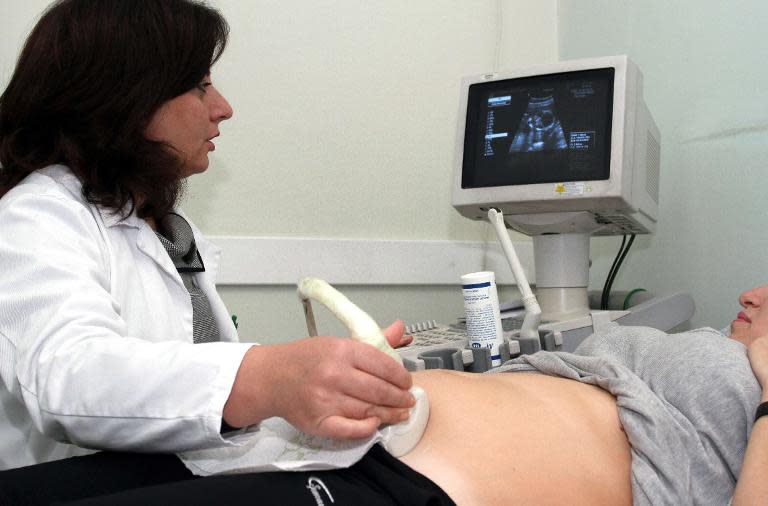
A pregnant Albanian woman watches her baby in the monitor as a doctor performs a sonogram in Tirana on November 9, 2011Washington (AFP) - The US Supreme Court refused Tuesday to hear a case concerning pre-abortion ultrasounds for women seeking to terminate their pregnancies in Oklahoma.
By refusing to take up the matter, the top US court let stand a ruling by the state's supreme court that struck down a local law requiring "the performance, display and explanation of a pre-abortion ultrasound."
The state claimed to have a "legitimate interest of reducing the risk that a woman may elect an abortion, only to discover later, with devastating psychological consequences, that her decision was not fully informed."
The law mandated that doctors or certified technicians working with them perform ultrasounds on woman at least an hour before carrying out an abortion.
It required the images to be displayed in such a way that they could be seen by the women in question and mandated a "simultaneous explanation of what the ultrasound is depicting."
In addition, physicians or certified technicians were required to provide a medical description of the images, which had to include such details, if applicable, of a heart beat and internal organs.
They also had to "obtain a written certification from the woman, prior to the abortion" although the measure stated that "neither the physician nor the pregnant woman shall be subject to any penalty if she refuses to look at the presented ultrasound images."
After examining the matter in closed session three times, the Supreme Court gave no explanation for its refusal to take it up.
Just last week, the court announced it would not review the Oklahoma supreme court's decision to overturn a state law that restricts the use of an abortion pill.
The decision effectively upholds the lower court's ruling that the law was unconstitutional, and will allow doctors in the state to prescribe RU-486, also known as the Mifepristone abortion pill.
It is also expected to say soon whether it will take up a Texas law that could lead to the closure of more than a third of clinics performing abortions in the state.
Despite its landmark "Roe V. Wade" decision in January 1973 legalizing abortion in the United States, the practice has remained a perennial source of controversy and in recent years a growing number of states have passed laws limiting it.
Supreme Court watchers expect the nine-member panel to revisit the issue.
On January 15, it will focus on the right of "pro-life" protesters to demonstrate in front of abortion clinics.
  
Read More
Posted in constitution, fetal-protection, GOP hypocrisy, Healthcare, pregnancy, Pro Choice, sanity, sex education, Supreme Court, war on women | No comments

Everything That’s Happened Since Supreme Court Ruled on Voting Rights Act

Posted on 07:35 by Unknown

Everything That’s Happened Since Supreme Court Ruled on Voting Rights Act 

by Kara Brandeisky and Mike Tigas
ProPublica, Nov. 1, 2013, 11:24 a.m.


Last year, we wrote extensively about photo ID laws and the Supreme Court’s decision to strike a key section of the Voting Rights Act of 1965. Now, with gubernatorial elections in New Jersey and Virginia, and the debt ceiling and healthcare debates already shaping the 2014 midterms, we’re revisiting voting policies to see which states have enacted tougher restrictions since the Supreme Court ruling in June.
Remind me – what is Section 5 of the Voting Rights Act?
Under the Voting Rights Act, states and localities with a history of racial discrimination needed to get permission from the federal government to enact any changes to their voting laws, in a process called “preclearance.” As of June 2013, nine states, mostly in the South – Alabama, Alaska, Arizona, Georgia, Louisiana, Mississippi, South Carolina, Texas and Virginia – needed to get any new voting laws pre-approved. Some counties and townships in California, Florida, New York, North Carolina, South Dakota and Michigan were also subject to preclearance.
Section 5 first applied to states that imposed literacy tests or other unfair devices, and had low voter registration or turnout. Congress later expanded the law to add jurisdictions with sizable minority populations and English-only election materials.
States and localities could “bailout,” or get off the preclearance list, after 10 years of elections without any problems. Several smaller jurisdictions bailed out over the years, including parts of Connecticut, Idaho, Maine, Massachusetts, Wyoming, Hawaii, and Colorado.
Of course, some of the biggest voting law battles of the 2012 election were in states not covered by Section 5 at all, such as Pennsylvania and Ohio.
What did the Supreme Court strike down in Shelby County v. Holder?
The Supreme Court decided, 5-4, that the preclearance formula was unconstitutional under the 10th  Amendment, which gives states the power to regulate elections. The Court ruled that the coverage formula was “based on 40-year-old facts having no logical relation to the present day.”
From the decision:


Cite as: 570 U. S. ____ (2013)

3

Syllabus
cial discrimination in voting" that had "infected the electoral process
in parts of our country for nearly a century," Katzenbach, 383 U. S.,
at 308. At the time, the coverage formula--the means of linking the
exercise of the unprecedented authority with the problem that warranted 
it--made sense. The Act was limited to areas where Congress
found "evidence of actual voting discrimination," and the covered 
jurisdictions shared two characteristics: "the use of tests and devices
for voter registration, and a voting rate in the 1964 presidential 
election at least 12 points below the national average." Id., at 330. The
Court explained that "[t]ests and devices are relevant to voting 
discrimination because of their long history as a tool for perpetrating
the evil; a low voting rate is pertinent for the obvious reason that
widespread disenfranchisement must inevitably affect the number of
actual voters." Ibid. The Court therefore concluded that "the coverage 
formula [was] rational in both practice and theory." Ibid.
Pp. 12-13.
(3) Nearly 50 years later, things have changed dramatically.
Largely because of the Voting Rights Act, "[v]oter turnout and 
registration rates" in covered jurisdictions "now approach parity. 
Blatantly discriminatory evasions of federal decrees are rare. And minority
candidates hold office at unprecedented levels." Northwest Austin,
supra, at 202. The tests and devices that blocked ballot access have
been forbidden nationwide for over 40 years. Yet the Act has not
eased ?5's restrictions or narrowed the scope of ?4's coverage formula
along the way. Instead those extraordinary and unprecedented features have 
been reauthorized as if nothing has changed, and they
have grown even stronger. Because ?5 applies only to those jurisdictions 
singled out by ?4, the Court turns to consider that provision.
Pp. 13-17.
(b) Section 4's formula is unconstitutional in light of current conditions. 
Pp. 17-25.
(1) In 1966, the coverage formula was "rational in both practice
and theory." Katzenbach, supra, at 330. It looked to cause 
(discriminatory tests) and effect (low voter registration and turnout), 
and tailored the remedy (preclearance) to those jurisdictions exhibiting both.
By 2009, however, the "coverage formula raise[d] serious constitutional questions." 
Northwest Austin, supra, at 204. Coverage today
is based on decades-old data and eradicated practices. The formula
captures States by reference to literacy tests and low voter registration and 
turnout in the 1960s and early 1970s. But such tests have
been banned for over 40 years. And voter registration and turnout
numbers in covered States have risen dramatically. In 1965, the
States could be divided into those with a recent history of voting tests
and low voter registration and turnout and those without those char-


One important technical point: the Supreme Court actually left Section 5 of the Voting Rights Act – the part of the law that describes how preclearance works – intact. Instead, the Court struck down Section 4, which explains which states and localities are subject to preclearance. If Congress amends Section 4, the Justice Department can start enforcing Section 5 again.
Why does this matter?

Takeaways

  • Seven preclearance states have announced new restrictions since the Supreme Court rolled back the Voting Rights Act.
  • Last year, a federal court called Texas's photo ID law "most stringent in the country.” Now, it's in effect.
  • Two months after the Supreme Court ruling on the Voting Rights Act, North Carolinacut early voting and eliminated same-day registration.
  • Are you registered to vote? Virginia has purged 38,000 voters, and Kansas has suspended registration for 17,500.
While literacy tests are a thing of the past, voting rights advocates say that statutes that limit early voting and registration, require voters to show photo ID, and purge voter rolls still disproportionately affect poor and minority voters.
The Supreme Court’s June 2013 decision also effectively shifted the burden from states to citizens. Before, a state subject to preclearance had to demonstrate that a new voting law was not discriminatory and let voting law experts in the Justice Department evaluate it before it could be implemented. Now it is up to voters to challenge voting laws by filing lawsuits under Section 2 of the Voting Rights Act, which prohibits racial discrimination.


But most court cases involving Section 2 have been limited to redistricting, not other controversial voting measures, says Yale University law professor Heather Gerken.
“With redistricting, there’s always one very wealthy political party or another who can hire some very good lawyers and go into court and challenge it,” Gerken said. “But a lot of the types of things that were challenged under Section 5 were smaller questions, like, ‘Can you change a polling place? Can you shut down early voting hours in ways that might affect the black community?’ There are things smaller than redistricting that can fall through the cracks.”
What have preclearance states done since the Supreme Court ruling?
a NORTH CAROLINA: Two months after the Supreme Court decision, North Carolina passed a number of measures, including strict new photo ID requirements. The law also eliminates same-day voter registration, shortens the early voting period by seven days, and specifies that ballots cast at the wrong polling station will be thrown out. Some changes will be phased in starting in 2014, and the photo ID provision goes into effect in 2016.
The North Carolina NAACP and a civil rights group called the Advancement Project have filed a lawsuit challenging the changes. The Justice Department also filed a suit of its own. But the suits venture into some new legal territory.
“What North Carolina did was definitely at the extreme of practices in this country,” Gerken said. “So if anything is vulnerable to a suit, it’s likely to be the North Carolina law. But again, the case law was built around redistricting cases. It wasn’t built around this kind of work.”
q TEXAS: Last year, a federal court rejected Texas’ voter ID law, calling it “the most stringent in the country.” The panel also rejected the state’s redistricting maps, finding that they protected white incumbents while altering districts with minority incumbents.
But on the very day of the Supreme Court ruling, Texas Attorney General Greg Abbott said the state would “immediately” enact both measures.
The photo ID law requires voters to present an approved form of photo identification, where before they could present mail, utility bills or other proof of voter registration. The Justice Department had refused to approve the law based on the state’s findings that Hispanic registered voters were far less likely to have the approved photo IDs. The new law also requires the photo ID presented on voting day to match the state’s voter rolls — complicating voting for some married women and others with name changes.
The Justice Department has filed a lawsuit against the newly enacted photo ID requirements and joined an ongoing lawsuit against the disputed redistricting maps.
I FLORIDA: After the Supreme Court ruling, Florida resumed its plans to remove non-citizens from its voter rolls using the federal SAVE (Systematic Alien Verification for Entitlements) database. The Department of Homeland Security database helps government agencies check the immigration statuses of people applying for government benefits like drivers’ licenses, housing assistance, or Medicaid.
But opponents of Florida’s measure say that SAVE data is faulty and not meant for elections, and that using the database to verify voter rolls will disenfranchise eligible voters. (Colorado legislators rejected a bill to purge rolls based on SAVE data for this very reason, but that didn’t stop Secretary of State Scott Gessler from moving ahead with the plan.) The Miami Herald found that Florida voters flagged for verification were disproportionately Hispanic, and most turned out to be citizens. The Department of Justice has also said that SAVE is not meant to be “a comprehensive and definitive listing of U.S. citizens,” especially since it doesn’t include data about people born in the United States.
A nonprofit group has challenged the law, but a federal court dismissed the lawsuit after the Supreme Court ruled that Florida was no longer subject to preclearance. Another group has appealed a similar case to the 11th Circuit.
s VIRGINIA: Virginia passed a number of voting laws this spring that seem likely to go into effect in wake of the Supreme Court ruling.
The Virginia legislature passed a photo ID law last year (which the Justice Department approved), but the more recent measure goes further to limit what kinds of voter identification are acceptable. Voters can no longer show utility bills, bank statements, government checks or paychecks before they vote, but they can get an ID for freeif they don’t already have one.
The new laws also require the Virginia State Board of Elections to remove ineligible voters by comparing state voter rolls with the SAVE database and other states.The Democratic Party of Virginia has sued the state over the interstate crosschecks, contending that the database has erroneous information and the law will disenfranchise poor, elderly and minority voters, but a federal judge rejected the suit for lack of evidence. As of Oct. 17, the Board of Elections had already purged more than 38,000 voters.
n SOUTH CAROLINA: In October 2012, a federal court blocked the implementation of South Carolina’s photo ID law until 2013. The court found that although the law was not discriminatory, there was not enough time to implement changes before the 2012 election. South Carolina Attorney General Alan Wilson said the Supreme Court ruling now allows states to “implement reasonable election reforms, such as voter ID laws similar to South Carolina’s.”
Y MISSISSIPI: Secretary of State Delbert Hosemann said Mississippi will enact a strict photo ID law by 2014. The state says it will provide free transportation to government offices where voters will be able to obtain free photo IDs.
B ALABAMA: Secretary of State Beth Chapman said Alabama would also enact changes to its photo ID law by 2014. Like Virginia, Alabama used to accept other kinds of non-photo identification, such as utility bills and Social Security cards. But the new law requires voters to present photo IDs (the state will also provide free voter IDs to those who don’t have them). Legislators passed the measure in 2011, but Alabama stalled in submitting the law for preclearance.
D ARIZONA: The Supreme Court issued another significant ruling on voting laws this summer: In Arizona et al. v Intertribal Council of Arizona, Inc. et al., the Court ruled that Arizona, formerly a preclearance state, could not unilaterally require voters to show proof of citizenship before registering to vote in a federal election. But the Court said Arizona could sue the Election Assistance Commission to get the federal voter registration form amended to require proof of citizenship. Now, both Arizona and Kansas have sued the commission.
In case their legal challenges are unsuccessful, the states are setting up two-tiered systems of voter registration, requiring proof of citizenship for state and local races but not federal ones. So far, Kansas has suspended registration for about 17,500 voters until those they submit proof of citizenship.
o SOUTH DAKOTA: Four Directions Inc., a Native American voting rights group, has asked the Justice Department to investigate why Secretary of State Jason Grant has so far refused to use federal money to fund satellite voting centers for registration and early voting on some Native American reservations.
What about non-preclearance states?
The 35 states that were not subject to any kind of preclearance were unaffected by the Supreme Court decision. But several of those states have also moved to tighten voting rules this year.
C ARKANSAS: This spring, Republican legislators overrode the governor’s veto to pass a law requiring voters to show photo IDs. If voters don’t have them, they can cast provisional ballots and return with IDs by the Monday after the election. The state will also provide free IDs to people who do not already have them.
L IOWA: In late March, Iowa implemented an administrative rule allowing Secretary of State Matt Schultz to begin a voter roll purge using the SAVE database. Activists have sued Schultz in an attempt to stop the purge.
O INDIANA: In May, Indiana enacted a law requiring officials to check voter rolls for individuals registered to vote in other states. The advocacy group Project Vote worries that the measure could lead to voter purges.
Z MONTANA: After Democratic Gov. Steve Bullock vetoed a measure that would have eliminated same-day voter registration, the legislature decided to let the people decide. In 2014, Montana citizens will vote in a referendum on whether to keep same-day registration. Backers of the measure say it will cut down on lines at the polls.
c NEBRASKA: This spring, Nebraska shortened early voting by 10 days. Voters will still be able to vote in the 25 days leading up to an election.
b NORTH DAKOTA: North Dakota is the only state without voter registration. In April, the state strengthened its voter ID law to no longer allow people without photo ID to vote by affidavit.
p TENNESSEE: This spring, Tennessee passed a bill restricting the kinds of IDs that can be used to vote. Previously, voters could show student IDs, out-of-state IDs, library cards, or any other IDs issued by counties or municipalities. Now only photo IDs issued by the state of Tennessee or the federal government are acceptable. The Green Party of Tennessee has sued the state over the law.
So, where does all of this leave the Voting Rights Act?
The Supreme Court left it up to Congress to write new preclearance criteria. In a July hearing, House Republicans showed little interest in rewriting Section 4. But Senate Judiciary Committee Chairman Patrick Leahy, D-Vt., says there’s actually quiet Republican support for the issue. Rep. Jim Sensenbrenner, R-Wis., made headlines when he publicly supported restoring the law.
“There is at least one Republican, and you’ll find out in the future a lot more, that is committing to putting life in this most important civil rights act that got a stab in the back from the Supreme Court,” Sensenbrenner said.
Gerken, the law professor, isn’t optimistic that Congress will come up with a new Section 4 formula. But she said there are other actions Congress could take. For example, she has advocated that Congress adopt an “opt-in” approach and allow civil rights groups to file simple complaints for the Justice Department to investigate. Then the agency could halt the implementation of discriminatory laws as necessary.
Yale law professor Travis Crum has also suggested a “bail-in” measure, by which Congress could instead strengthen Section 3 of the Voting Rights Act, letting courts put states under preclearance if their voting laws violate the 14th or 15th amendments.
As part of the Justice Department’s lawsuits against Texas and North Carolina, the federal agency has asked the courts to put those states back under preclearance.
This post will be kept up-to-date. Has your state or local government restricted voting rights since June 2013? Tweet at me, email me at kara.brandeisky@propublica.org or leave a comment below.

MAP METHODOLOGY: This map tracks state voting laws before and after Shelby County v. Holder on four key issues: photo ID, early voting, same-day registration and voter roll purging. States with the most restrictive voting measures involving these four issues are the darkest; each state earned one point per restrictive policy. So a state with restrictive policies in all four areas would have a score of four and appear the darkest. The “before” map reflects policies in place on June 24, 2013, the day before the Shelby County v. Holder ruling. The “after” map reflects policies in place as of Oct. 31, 2013, even if the changes are pending implementation. Details on scoring per issue follow.
Photo ID: States received a point if they will require photo ID in upcoming elections (even 2014 or 2016) as of Oct. 31, 2013. States that require ID but also accept non-photo IDs, such as paychecks or utility bills, didn’t receive a point. Likewise, states that have passed photo ID legislation but have been unable to enact the law because of a court order (such as Wisconsin and Pennsylvania), didn’t get a point.
Early voting: States received a point if they don’t allow in-person voting before Election Day, or require an excuse for absentee early voting. States that have shortened early voting didn’t get a point as long as they still allow some early voting.
Same-day registration: States received a point if they don’t allow registration on Election Day.
Voter roll purging: States received a point if they have asked for access to, or support using, the Systematic Alien Verification for Entitlements (SAVE)database to maintain state voter rolls. Not all states that have requested access have actively begun purging voter rolls.


Read More
Posted in civil rights, constitution, GOP hypocrisy, inequality, Judiciary, No H8, Racism, Supreme Court, VOTE, Voter ID, Voter Suppression, Voting Rights Act, VRA | No comments

Tuesday, 12 November 2013

Posted on 14:12 by Unknown

Attorney to court: Wis. union plan is burden

Attorney tells Wis. Supreme Court union plan is unconstitutionally burdensome


Associated Press
By Todd Richmond, Associated Press 7 hours ago


Attorney to court: Wis. union plan is burden


Wisconsin Attorney General J.B. Van Hollen presents arguments in Madison Teachers Inc. vs. Scott Walker, in the Wisconsin Supreme Court at the state Capitol in Madison, Wis., Monday, Nov. 11, 2013. Van Hollen argued that portions of Gov. Scott Walker's union restrictions are constitutional. (AP Photo/Wisconsin State Journal, M.P. King, Pool)

MADISON, Wis. (AP) -- Labor attorneys pushed the Wisconsin Supreme Court on Monday to strike down portions of Republican Gov. Scott Walker's public union restrictions, arguing the prohibitions are designed to force school district and municipal workers to abandon their unions.
The court's decision could bring to an end one of the last unresolved legal challenges to the contentious restrictions that stripped almost all public workers of nearly all their union rights. Union supporters face an uphill fight, though, because conservative justices control the court.
Lester Pines, an attorney for a Madison teachers union, pressed ahead during oral arguments Monday, telling the justices that Walker's restrictions penalize local public workers who exercise their constitutional right to freely associate with a union. Their organizations can't collectively bargain for anything beyond base wage increases based on inflation or automatically withdraw dues from members' paychecks and must hold annual elections to see if their members want them to continue representing them, Pines said. The measures are designed to be so onerous that people simply quit their unions, he said.
"This isn't benign," Pines said. "These provisions are designed to make it impossible for people to exercise their associative rights."
Attorney General J.B. Van Hollen, a Republican, appeared in person to argue for the Walker administration. He said constitutionality isn't an issue because collective bargaining is a benefit granted through state statutes. He maintained union members are still free to associate with one another and ask their employers for higher wages and other benefits. The restrictions simply mean they can't force their employers to listen.
"It is not a constitutional violation to limit the scope of collective bargaining," Van Hollen told the justices.
The case centers on a lawsuit a Madison teachers union and a Milwaukee public workers union filed in 2011 challenging the restrictions. Dane County Circuit Judge Juan Colas ruled last year the restrictions unfairly burden school district and municipal union members by infringing on their constitutional rights to free speech, association and equal protection.
Colas' ruling didn't affect state workers but it was unclear how broadly it applied to local public unions. Insisting the ruling applied only to Madison teachers and Milwaukee public workers, the Wisconsin Employment Relations Commission continued to prepare for certification elections for hundreds of school district worker unions that had been set for this month.
Six unions not involved in the case asked Colas to find WERC in contempt of court. Colas granted the request in October, declaring his ruling meant no one could enforce the restrictions against any local public union. WERC stopped preparing for the elections pending the Supreme Court ruling.
State attorneys also tried to persuade the justices Monday to stay the contempt finding, arguing delaying the certification elections creates more uncertainty. Tamara Packard, another attorney for the Madison teachers, countered Colas properly issued the order; without it, she said, unions would have had to spend resources campaigning for unconstitutional elections.
The justices grilled both sides' attorneys for hours.
The conservative bloc appeared skeptical about the contempt order; Justice Michael Gableman mused WERC might have been prudent to continue election preparations given all the legal questions surrounding the restrictions and pointed out the state would have to spend resources setting up the elections as well so it's unclear which side would suffer greater harm.
Chief Justice Shirley Abrahamson, one of the court's two liberal-leaning justices, questioned whether granting the stay would mean unions that haven't filed notice with WERC that want to hold elections in November would be immediately de-certified.
"It looks as if WERC would say too bad, so sad, you're out of luck," she said.
It's unclear when the court might rule on merits of the case or the stay request. The justices face no deadline for issuing a decision.
A federal appeals court panel has upheld the restrictions, as did a federal judge in Madison in a separate challenge. Dane County Circuit Judge John Markson last month dismissed a Wisconsin Law Enforcement Association lawsuit challenging the restrictions.
Read More
Posted in Criminal, inequality, Right To Work, Scott Walker, Supreme Court, Tea Party, Tin Foil Hat, unions, wage theft, Walker, WI, wisconsin | No comments

Bill to Ban Certain Tattoos, Body Piercings Passes Senate

Posted on 07:25 by Unknown

Bill to Ban Certain Tattoos, Body Piercings Passes Senate

Posted by PBSpot Admin      20 August 2013 


banned-tats
The Arkansas Senate passed a bill to ban tattoos, piercings and other similar body modifications which it characterizes as “non-traditional,” recently.
Senator Missy Irvin of Mountain View, Arkansas sponsored the bill entitled ”An Act To Limit Body Art Procedures”. She says that body modifications should be limited to “traditional” tattoos and piercings. Her proposal was to essentially ban scarification procedures and dermal implants, as well as certain tattoos which remain yet to be defined as by the vague language of the bill she sponsored.

Almost unbelievably, this bill passed by a 26-4 vote. Following this, the bill was sent to the House, where it took on even more vague language. See the link above for the bill as it was eventually “compromised” on in the House. The scarification ban from the Senate version was removed, while considerable ambiguous language remained. The House “compromise” bans dermal implants unless performed by a doctor. This essentially, and in practice, outlaws the body modification. As well, the bill’s vague, undefined language – even in the edited, House version – while editing out some of the original language on tattoos, fails to define a number of important issues raised by the Senate version, including what they mean by “cosmetic” tattoos as opposed to “non-cosmetic” tattoos.
If the government dictating what you can and can’t do with your body bothers you, SPREAD THE WORD!
(Article by Micah Naziri, image Sandy TrueBodyArt)
Read More
Posted in constitution, Free Speech, GOP hypocrisy, No H8, sanity, Sharia Law, Stupid, Supreme Court, Tin Foil Hat | No comments

Is Ginni Thomas' Expanding Activism a Problem for Supreme Court Justice Clarence Thomas?

Posted on 06:35 by Unknown

Is Ginni Thomas' Expanding Activism a Problem for Supreme Court Justice Clarence Thomas?

Her fierce political advocacy with Groundswell revives conflict of interest questions surrounding her husband.

—By Stephanie Mencimer
| Fri Jul. 26, 2013 9:03 AM PDT

Rex Curry/ZumaPress and Chris Zumma/ZumaPress
Virginia "Ginni" Thomas is no ordinary Supreme Court spouse. Unlike Maureen Scalia, mother of nine, or the late Martin Ginsburg, mild-mannered tax law professor who was good in the kitchen, Thomas came from the world of bare-knuckled partisan politics. Over the years, she has enmeshed herself ever more deeply in the world of political advocacy—all the while creating a heap of conflict of interest concerns surrounding her husband, Supreme Court Justice Clarence Thomas. Her role in Groundswell, the coalition of conservatives waging a "30 front war" against progressives and the GOP establishment that was revealed by Mother Jones on Thursday, revives questions about the propriety of Thomas' activism on issues that have or could become the subject of Supreme Court cases.
Conflict of interest issues were first aired during Clarence Thomas' confirmation hearings in 1991, when critics argued that Ginni Thomas' political work might compromise her husband's objectivity. At that time, her political resume included stints as a Capitol Hill aide to a Republican congressman; a staffer at the US Chamber of Commerce, where she fought the Family and Medical Leave Act; and as a political appointee at the Labor Department during the first Bush administration. Thomas didn't leave politics after her husband was confirmed. "I did not give up my First Amendment rights when my husband became a justice of the Supreme Court," she has said in the past. She would later return to the Hill as a staffer to House majority leader Rep. Dick Armey (R-Texas) and work for the Heritage Foundation, the conservative think tank. But in those jobs, Thomas kept a relatively low profile.
Advertise on MotherJones.com
That changed around the same time that the tea party exploded in American politics, and Thomas became an outspoken member of the movement. In late 2009, Thomas founded the political advocacy group Liberty Central, which would later become a fierce player in the opposition to health care form. Detractors pointed out that Liberty Central was a potential vehicle for people with interests before the Supreme Court to make anonymous donations that might influence her husband.
The group was formed with a $500,000 anonymous donation that came as the Supreme Court was considering Citizens United, a case that ultimately resulted in loosening the restrictions on corporate giving to political campaigns. The anonymous donor was later revealed to be Harlan Crow, the Texas real estate developer. Crow was also a friend of Clarence Thomas', and he was later linked to a scandal involving the justice's failure to publicly disclose gifts from the developer and trips aboard his private jet. (It didn't help that Justice Thomas had also failed to include his wife's $150,000 annual salary from Liberty Central on his financial disclosure forms, which he later had to amend.) In January 2011, the good-government group Common Cause asked the Justice Department to investigate whether Justice Thomas should have recused himself from Citizens United based on his wife's role at Liberty Central. (Common Cause also asked the IRS to revoke Liberty Central's nonprofit status. Nothing came of either request.)
Thomas ultimately stepped down from Liberty Central, and the group merged with the Patrick Henry Center for Individual Liberty, a nonprofit started by former FBI agent Gary Aldrich (who's best known for writing a book claiming that Bill and Hillary Clinton hung sex toys on the White House Christmas tree while Clinton was president). But she continued to be deeply involved with the opposition to Obamacare. She formed Liberty Consulting, which focused on health care issues, and, while never registering as a lobbyist, she began visiting members of Congress as an "ambassador" from the tea party movement. Due to her outspoken anti-Obamacare advocacy, and the fact that she was earning a living in connection with it, liberal activists called on Justice Thomas to recuse himself from ruling on matters related to Obamacare. He declined to do so and later joined the minority in voting to overturn the health care law, as he was widely expected to do.
The recent revelations about Thomas' role in Groundswell will no doubt resurrect the debate over whether her advocacy causes conflicts for her husband. Gun safety, immigration, voting rights and voter ID, environmental concerns—all of these issues have been covered by Groundswell, and all of them are subjects that regularly come before the Supreme Court. (Ginni Thomas did not respond to a request for comment.)
Arn Pearson, vice president for policy and litigation at Common Cause, says that Thomas' work with Groundswell raises "important questions about appearances of conflict, especially if the things she works on end up coming before the Supreme Court, and especially if [the members of Groundswell] end up getting involved in elections." The work she's doing now, he says, doesn't pose quite the same conflicts as her anti-Obamacare advocacy, in which she was directly attacking a specific law whose future rested with the Supreme Court her husband sits on.
The broader problem, Pearson says, is that the Supreme Court has no real mechanism for dealing with possible conflicts of interest, because the high court has refused to subject itself to the same code of conduct that applies to the rest of the federal court system. That code spells out the rules judges must follow to avoid conflicts—rules that include not making speaking appearances at politically tinged fundraisers, as Justices Antonin Scalia and Samuel Alito have done in the past. Another rule requires federal judges to recuse themselves from cases in which a spouse has a financial interest, a provision that would seem to be relevant to the Thomases.
Democratic members of Congress, including Connecticut Sens. Richard Blumenthal and Chris Murphy and Rep. Louise Slaughter (D-N.Y.), are trying to remedy the situation with two bills that would bind the Supreme Court to the same ethics rules as lower court judges. The bills could be introduced as early as next week, but they don't have a single Republican co-sponsor, making their future fairly dim.
One thing that may insulate Justice Thomas from potential conflicts over his wife's work, in the near-term at least, is congressional gridlock. "I don't know how we're going to get any more conflicts out of Congress because they don't pass anything," Pearson says.
Read More
Posted in Clarence Thomas, constitution, Judges, Judiciary, Republican, Supreme Court, Tea Party | No comments
Older Posts Home
Subscribe to: Posts (Atom)

Popular Posts

  • Rand Paul’s staff on Ted Cruz: 'Chief of wacko birds'
    Rand Paul’s staff on Ted Cruz: 'Chief of wacko birds' November 3 By STEVE KRASKE The Kansas City Star The political yak on this Mon...
  • Special Investigation: How Insurers Are Hiding Obamacare Benefits From Customers
    Special Investigation: How Insurers Are Hiding Obamacare Benefits From Customers Dylan Scott – November 4, 2013, 5:13 AM EST Donna receiv...
  • Good News issues statement on UM Council of Bishops request
    Good News issues statement on UM Council of Bishops request November 15, 2013 By UMReporter Staff   Good News, the independent group of U...
  • Mary Burke brings in big guns to unseat Scott Walker
    Mary Burke brings in big guns to unseat Scott Walker by Ole Texan Follow   Mary Burke has never run for statewide office, but her deep pock...
  • The ‘biblical view’ that’s younger than the Happy Meal
    The ‘biblical view’ that’s younger than the Happy Meal February 18, 2012 By Fred Clark     In 1979, McDonald’s introduced the Happy Meal. ...
  • Obamacare's Mystery Woman Says She Fell Victim to Cyberbullies
    Exclusive: Obamacare's Mystery Woman Says She Fell Victim to Cyberbullies By ABBY D. PHILLIP | Good Morning America  –  46 minutes ago ...
  • Which professions have the most psychopaths?
    Which professions have the most psychopaths? And which have the fewest? By Eric Barke...
  • "Wendy Davis Redefines ‘Pro-Life,’ Enrages Anti-Choicers"
    "Wendy Davis Redefines ‘Pro-Life,’ Enrages Anti-Choicers" by varii Follow   I found this article on The National Memo about a spee...
  • The Nazi Anatomists—and American abortion politics.
    The Nazi Anatomists How the corpses of Hitler's victims are still haunting modern science—and American abortion politics. By Emi...
  • Jon Stewart Blasts Rand Paul For Plagiarizing Wikipedia
    Jon Stewart Blasts Rand Paul For Plagiarizing Wikipedia Posted: 11/08/2013 10:30 am EST   | ...

Categories

  • 60 Minutes
  • Abortion
  • ACA
  • AL
  • Alaska
  • ALEC
  • American Family Association
  • American Indian Movement
  • Americans for Prosperity
  • Anarchist
  • anatomy
  • Ann Coulter
  • Armed Forces
  • Arpaio
  • Arrogant Ass
  • Ayn Rand
  • AZ
  • Bachmann
  • Barbara Boxer
  • Benghazi
  • Bill Maher
  • Bill Moyers
  • Bill O'Reilly
  • Birthers
  • Budget
  • Business
  • CBS
  • Cenk Uygur
  • Chris Christie
  • Chris Wallace
  • Christian
  • Churchianity
  • civil rights
  • Clarence Thomas
  • Climate Change
  • clowns
  • cnn
  • Congress
  • Conservative
  • constitution
  • corporate greed
  • Criminal
  • Crossroads GPS
  • Daily Beast
  • Daily Show
  • DailyKOS
  • DailyKOS.
  • Darrell Issa
  • Death Panels
  • debt ceiling
  • Defense
  • DEM
  • Dianne Feinstein
  • Dick Cheney
  • diplomacy
  • Diseased Pig
  • drug-abuse
  • Dummies
  • Economy
  • education
  • Elizabeth Warren
  • ENDA
  • energy prices
  • environment
  • Eric Cantor
  • Executive Compensation
  • Faith
  • Family Research Council
  • Fascist
  • fast food workers
  • FDR
  • Feminism
  • fetal-protection
  • Filibuster
  • Filth
  • financial
  • FL
  • Flush Rush
  • Food Stamps
  • Fox News
  • fracking
  • fraud
  • FRC
  • Free Press
  • Free Speech
  • FreedomWorks
  • Fukushima
  • Funny
  • GA
  • George W Bush
  • George Zimmerman
  • Georgia
  • Glenn Beck
  • GOP
  • GOP hypocrisy
  • GOP Math
  • GUNS
  • Hannity
  • Harry Reid
  • Hateful Prick
  • Healthcare
  • Heritage Foundation
  • Huffpost
  • Immigration
  • inequality
  • Iran
  • Islam
  • Jesus
  • Jewish
  • Jimmy Carter
  • Jobs
  • John Boehner
  • John F Kennedy
  • Jon Stewart
  • Judges
  • Judiciary
  • Justice for Trayvon
  • Karl Rove
  • Kennedy
  • Kentucky
  • Keystone XL
  • KKK
  • KOCH BROS
  • Lara Logan
  • lawsuit
  • LeftAction
  • Lemmingtarian
  • LGBT
  • Liberal
  • Libertarian
  • Lindsey Graham
  • LOL
  • Main Stream Media
  • manufacturing
  • Marco Rubio
  • Marijuana
  • Marriage
  • Media Matters
  • Medicaid
  • Medicare
  • Meet the Press
  • Megyn Kelly
  • MI
  • Michelle Malkin
  • Michigan
  • Mitch McConnell
  • Mitt Romney
  • MN
  • Mother Jones
  • MSNBC
  • NC
  • negotiations
  • Neo-Confederate
  • Neo-Nazi
  • New Times
  • News Corpse
  • Nine Inch News
  • NJ
  • No H8
  • No Hate
  • NRA
  • NYT
  • Obama
  • Obamacare
  • Obstruction
  • Ohio
  • parody
  • Pat Robertson
  • Paul Ryan
  • PBS
  • Pentagon
  • Plum Line
  • PoliticusUSA
  • Pope Francis
  • prayer
  • pregnancy
  • Pro Choice
  • Pro-Life
  • Racism
  • Rand Paul
  • Rape
  • RAW Story
  • Reagan
  • Reince Priebus
  • Religion
  • Republican
  • Rick Perry
  • Rick Santorum
  • Rick Scott
  • Right To Work
  • Rolling Stone
  • Romney
  • Ron Paul
  • Rush Limbaugh
  • Salon
  • sanity
  • Sarah Palin
  • Satire
  • Scalia
  • Scandal
  • Scott Walker
  • Secession
  • Sedition
  • Senate
  • Senate Filibuster
  • Senate Filibuster Reform
  • sex education
  • Sharia Law
  • Shut Down
  • Social Security
  • southern poverty law center
  • splc
  • Stand Your Ground
  • Stephen Colbert
  • Stephen Lemons
  • Stupid
  • Supreme Court
  • Tax Cuts
  • taxes
  • Tea Party
  • Ted Cruz
  • Teddy Roosevelt
  • Texas
  • Texas GOP
  • Think Progress
  • Time Mag
  • Tin Foil Hat
  • Tom DeLay
  • Tony Perkins
  • TPM
  • trade
  • Trey Radel
  • unions
  • VA
  • VETS
  • Video
  • VOTE
  • Voter ID
  • Voter Suppression
  • Voting Rights Act
  • VRA
  • wage theft
  • Walker
  • Walmart
  • War on Christmas
  • War on science
  • war on women
  • Westboro Baptist Church
  • White House
  • WI
  • Wink Progress
  • wisconsin
  • wolf blitzer
  • Wonkette

Blog Archive

  • ▼  2013 (500)
    • ▼  November (469)
      • Texas Gov. Rick Perry to be Investigated for Abusi...
      • Arizona Violent Crime Down, Except Under Tough Ant...
      • Right-Wing Christians Put Out Their Top-10 Favorit...
      • Rush Limbaugh: “This Is Just Pure Marxism Coming O...
      • Is a Neurotic Form of Christianity Destroying Amer...
      • Religious Right Furious Pope Francis Wants Them To...
      • Michigan about to require women to buy "rape insur...
      • Conversations With A Tea Party Patriot: Is Obama B...
      • 10 Headlines Fox News Might Have Written Had They ...
      • Latest job numbers not good for Scott Walker — or ...
      • Black Friday Our Walmart Announces 1,500 Protests ...
      • 6 Outrageously Greedy Companies That Make Scrooge ...
      • To quote from Sodom and Gomorrah: ” … So don’t be ...
      • Conservative Christian Leader Says Single Moms Sho...
      • Cartoon Claims Obamacare Means Men Will Get STDs F...
      • Why the Christian Right Believes It Has Once-in-a-...
      • Asshat Limbaugh Falls For "White Males Should Kill...
      • 7 Reasons Why It's Easier for Humans to Believe in...
      • Rick Perry Is Quietly Encouraging Texans to Sign U...
      • Twelve Times Scott Walker Was Terrible
      • What Really Happened at the First Thanksgiving? Th...
      • Right vs. Left in the Midwest
      • 10 Tips For a Libertarian Thanksgiving
      • Local News Station Busts Darrell Issa for Silencin...
      • Lara Logan asked to take leave of absence from 60 ...
      • John F. Kennedy's Prophetic Rebuke of Tea Party Po...
      • Ted Cruz Quite Possibly Just Made His Most Ridicul...
      • 20 Clues that you not a Progressive
      • Elisabeth Hasselbeck Knows Who Is ‘Smart,’ And Tha...
      • The Religious Right With Their Weaponized Jesus Ar...
      • Palin: Half-Term Half-Wit God ‘blessed’ with me a ...
      • The American Family Association wants Christians t...
      • Three of the Biggest Lies Republicans Tell About T...
      • 5 reasons why the American people can't stand the ...
      • Heart of Darkness: Criminal Investigation of WI Re...
      • Focus on the Family serves up a rancid turkey in t...
      • Media Manufactures GOP 2016 Front-Runner From Abje...
      • Just How Stupid, Mean and Spiteful is the Evangeli...
      • 10 Weirdest Fundamentalist Christian Conspiracy Th...
      • Fox News host: Obamacare ‘touches so many people’s...
      • WI-Gov: Scott Walker (R) Says It's "Insulting" Tha...
      • High-powered attorneys line up in John Doe case
      • Ex-Generals Say President Obama Must be Forced to ...
      • Ted Cruz’s Aggressive Campaigning Could Hurt Him W...
      • Fox: We’ve ‘Gone Six Years With Almost No Criticis...
      • Who’s Destroying Christianity? It Sure as Hell Isn...
      • Wisconsin Governor Defends Ban On Same-Sex Marriag...
      • Survey: Low IQ Leads To Racism And Extreme Conserv...
      • John Cornyn, Texas Senator, Says Iran Deal Is Obam...
      • Fact-checking the Sunday Nov. 24 shows
      • Ya Big Bully
      • Methodist Marriage: Robin Hynicka State of Belief ...
      • How Republicans Fit The Classic Profile Of An Abuser
      • 10 Questions Every Liberal Should Ask Every Republ...
      • Leaked: The Republican Obamacare Sabotage ‘Playbook’
      • BUSTED! Proof John Boehner Faked Obamacare Sign-Up...
      • 35 Founding Father Quotes Conservative Christians ...
      • Crossroads GPS Spent More On Politics Than It Repo...
      • Cruz, comity, and comedy
      • Christian Patriots Calling For Assassination Of Ob...
      • 4 'Magic' Phrases to Use if Cops Stop You with Pot
      • No thanks to Walmart
      • Up Close With Small-Town White Male Rage
      • A Nonpartisan Ethics Organization Just Named the W...
      • Geraldo Rivera Blasts FOX News For Lying about Ben...
      • In rural Kentucky, health-care debate takes back s...
      • Christians have not been ‘reading the Bible this w...
      • "Birther" Busted For Threatening To Kill Obama Wis...
      • 7 signs America has regressed — to the 19th century
      • 5 Christian Right Delusions and Lies About History
      • #GopDontCare about anything else other than trashi...
      • University of Minnesota Scientist Drops Bombshell ...
      • Jesus Ate a $95,000 Truffle: The Evangelical GOP W...
      • Michele Bachmann: ‘If God Wanted Everyone To Have ...
      • House Speaker John Boehner successfully enrolled i...
      • STUDY: Nearly Three-Quarters Of Americans With Ind...
      • The Real Fox News
      • Republicans Outraged Over President Obama and Gett...
      • School officials threatened to be ‘lined up and sh...
      • Senator Harry Reid – Speech on Filibuster Reform 1...
      • Latest Koch Brothers Trickery: Actress Fakes Testi...
      • Fox News Pundit Says End Of Judicial Filibuster Co...
      • Rand Paul Throws a Tantrum on CNN and Calls Harry ...
      • Fox News Chastises People For Giving To The Homele...
      • Hasselbeck: Oprah shouldn’t call out racists becau...
      • How Bush's grandfather helped Hitler's rise to power
      • Stop Fox News: Tell FCC To Revoke Broadcast Licens...
      • Adam Smith Father of Capitalism on Taxing the Rich
      • U.S. Senate goes 'nuclear' on filibuster rules
      • Sean Hannity's Call To Obamacare Hotline Gets Empl...
      • BP Oil Refinery Waste Stored At Koch Brothers-Owne...
      • Boehner Won't Punish Trey Radel After Guilty Plea ...
      • Law Does Apply to the Rightwing and Koch Brothers
      • Right-Wing Hackers Create ‘Destroy Obamacare!’ Pro...
      • 25 Ridiculous Conservative Ideas In Their Own Words
      • Whitehouse Responds to Westboro Baptist Church Pet...
      • Paul Ryan’s Poverty Plan Includes Religion, But No...
      • How the GOP Is Literally Killing Its Voters
      • Just Freaking Wow . . . This Is How The Tea Party ...
      • Joe Arpaio's Flunky Dave Trombi Tangles with Denni...
      • Brownback (Kansas) Turns Medicaid Over to Private ...
      • Palin, Beck Launch Campaigns for President of Shad...
      • Obama’s new Obamacare ‘fix,’ explained in one minute
      • Fukushima Fallout Damaged Thyroid Glands of Califo...
      • Gov. Walker Offers New Explanation to National Med...
      • Scott Walker: Paul Ryan, Reince Priebus And I Are ...
      • New Bill Would Force Congress To Stay In Washingto...
      • Michele Bachmann Considers Suing Obama Over Cancel...
      • Right-Wing Noise Machine Fabricates Gettysburg Add...
      • Brad T: 2032: Republicans, Ramen & Reproductive Ri...
      • Anonymous Hacks Neo-Nazi Website, Finds Ron Paul C...
      • Wal-Mart's Employee Food Drive
      • You Might Be Surprised Who Collects on the Tips Yo...
      • Why Conservative Comedy Does Not Work
      • The Republican Alphabet
      • You Might Be A Fascist If…
      • 10 Tactics To Get A Republican To Agree With You
      • ‘You Know You’re a Liberal If…’ 33 Litmus Tests fo...
      • Republican Jesus’ Ten Commandments
      • 45 Quotes To Use When Describing Conservatives And...
      • These Two Anti-Abortion Protesters Should NOT Have...
      • Anti-Obama ‘Revolution’ Fizzles As Only About 100 ...
      • Bill Maher Looks At Sarah Palin & Pope Francis' He...
      • Vatican Unveils Frescoes In Catacombs of Priscilla...
      • Wisconsin GOP aims to scrap weekend voting
      • Conservatives flip out after Obama reads original ...
      • Conservative Catholic Group Ties Illinois Tornadoe...
      • Healthcare plan enrollment surges in some states a...
    • ►  October (31)
Powered by Blogger.

About Me

Unknown
View my complete profile